Best Studio Headphones for Mixing: 5 Picks for Mac
Five studio headphones for mixing ranked on Sonarworks and RTINGS measurements, critic scores and US prices: the Sennheiser HD 490 PRO for most mixes, the HD 560S on a budget and the Sony MDR-MV1 straight from a Mac headphone jack.

The Sennheiser HD 490 PRO is the pair I’d buy for most mixing, at about $429 in the October 30, 2026 US price snapshot. Its Sonarworks final review rating is 8.8 out of 10 without correction, a tenth behind the $699 Neumann NDH 30; that rating is separate from Sonarworks’ frequency-response score. On a budget, the HD 560S costs about $180. If you record vocals on the same pair or mix in a noisy room, the closed-back HD 480 PRO at $399 does both jobs, and the Sony MDR-MV1, $339.99 on sale against $419.99, gets the loudest straight from a Mac headphone jack.
The NDH 30 is the upgrade, and the natural pair if you already mix on Neumann KH monitors. I ranked the five on what decides a mixing pair: how neutral they measure before correction, how closely units match, whether they leak, what it takes to drive them, and the price new. The measurements come from Sonarworks, which sells the SoundID Reference correction software, and from RTINGS. The critic verdicts come from MusicRadar, MusicTech, SoundGuys, TechRadar, What Hi-Fi?, Home DJ Studio, Pickr and Sound On Sound, plus Thomann buyer ratings. Prices and buyer counts are the October 30, 2026 snapshot; the price comparisons below use that same snapshot. Check the current total before ordering.
Which studio headphones should you buy for mixing?
Start with the room, then the budget. Four of the five are open-back, and open-backs leak, so they belong in a quiet room with no microphone open nearby. The HD 480 PRO is the closed pair: it keeps its sound in when you track and blocks some of a noisy room. All five run from a recent Mac headphone jack on paper, so an amp is not part of the choice.
| Headphones | US new price, October 30 snapshot | Back, impedance | Best for |
|---|---|---|---|
| Sennheiser HD 490 PRO | about $429 ($499 for the Plus kit) | Open, 130 Ω | Most mixing work |
| Sennheiser HD 560S | about $180 | Open, 120 Ω | A budget pair |
| Sennheiser HD 480 PRO | $399 | Closed, 130 Ω | Tracking and mixing on one pair |
| Sony MDR-MV1 | $339.99 on sale, $419.99 list | Open, 24 Ω | Mixing straight from a Mac headphone jack |
| Neumann NDH 30 | $699 | Open, 120 Ω | The upgrade, and a match for Neumann KH monitors |
The recorded October 30 prices come from Sennheiser’s two US stores, Sony’s US store and Neumann’s US store. The HD 560S was $179.95, $100 under its $279.95 compare-at price, and Sony’s $339.99 for the MV1 was a sale taking $80 off the $419.99 list price. The HD 490 PRO Plus kit costs $70 more than the standard HD 490 PRO.
How do their ratings and measured response compare?
Two sources publish usable numbers for these pairs. The Sonarworks figures below are its final review ratings without and with model-average calibration. They are separate from its Sound and Frequency Response subscores, and it sells SoundID Reference, the app and DAW plugin that does that calibration, so the scores come from a company with something to sell. I still use them because Sonarworks measures several pairs of each model and, by its own method, lowers the score when pairs differ. RTINGS reports how far the bass and treble sit above or below its target response, so 0 dB is on target.
| Headphones | Sonarworks final rating: no correction (model-average correction) | Matching observations (Sonarworks) | RTINGS bass | RTINGS treble |
|---|---|---|---|---|
| Neumann NDH 30 | 8.9 (9.1) | Channel balance: a couple of 2 dB differences across 8 pairs | Not included here | Not included here |
| Sennheiser HD 490 PRO | 8.8 (9.4) | Channel balance: bass matched, high mids within 2 dB across 3 pairs | −1 dB | 0 dB |
| Sony MDR-MV1 | 7.7 (9.0) | 3 pairs, effectively identical | No figure (older test bench) | No figure (older test bench) |
| Sennheiser HD 560S | 7.3 (8.2) | Channel balance: about ±1 dB through most of the range | −4 dB | 0 dB |
| Sennheiser HD 480 PRO | No score in the sources used here | No score in the sources used here | +1 dB | −1 dB |
Read the two scales separately: Sonarworks’ final review ratings are not direct dB errors. The NDH 30 and HD 490 PRO have the highest uncorrected final ratings, with increases of 0.2 and 0.6 points in the calibrated ratings. The MV1 and HD 560S start lower and gain 1.3 and 0.9 points, which matters only if you plan to run correction while you mix. The Sonarworks sources used here do not include the HD 480 PRO, so its measured case rests on RTINGS, where it sits within 1 dB of target at both ends. Of the picks RTINGS gives figures for, the HD 560S is the lightest in the bass, at 4 dB under target.
How do critics and buyers rate them?
I put each editorial score on one 10-point scale, so MusicRadar’s 4.9 stars count as 9.8 and What Hi-Fi?’s 4 stars count as 8. Each pair has two to four scored reviews in this comparison. The median summarizes those verdicts; it does not turn different reviewers’ methods into one laboratory test.
| Headphones | Critic scores (out of 10) | Median | Range | Buyer rating |
|---|---|---|---|---|
| Sennheiser HD 490 PRO | MusicRadar 9.8, MusicTech 9, SoundGuys 6.8 | 9.0 (3 reviews) | 6.8 to 9.8 | 4.7 of 5 from 100 buyers |
| Sennheiser HD 560S | TechRadar 9.0, Home DJ Studio 9.0, SoundGuys 6 | 9.0 (3 reviews) | 6 to 9.0 | 4.7 of 5 from 140 buyers |
| Sennheiser HD 480 PRO | MusicTech 9, MusicRadar 9.0, Pickr 8.4, SoundGuys 7.7 | 8.7 (4 reviews) | 7.7 to 9 | 4.7 of 5 from 6 buyers |
| Sony MDR-MV1 | MusicTech 10, What Hi-Fi? 8, SoundGuys 6.4 | 8.0 (3 reviews) | 6.4 to 10 | 4.8 of 5 from 38 buyers |
| Neumann NDH 30 | MusicTech 8, SoundGuys 6.2 | 7.1 (2 reviews) | 6.2 to 8 | 4.7 of 5 from 83 buyers |
Buyer ratings are the Thomann customer scores captured on October 30, 2026, linked in each section below. They cluster at 4.7 and 4.8, so they tell you owners are happy, not which pair is most accurate, and the HD 480 PRO had only six in that snapshot. SoundGuys gives the lowest score to all five pairs, so it widens every range without changing the order much. Both sets of numbers point to the HD 490 PRO: it ties for the top critic median and sits a tenth off the top Sonarworks score.
Should a mixing pair be open-back or closed-back?
Open-back for mixing in a quiet room, closed-back when a microphone is live or the room is noisy. RTINGS finds the HD 560S leaks a lot of audio, and it says the same about the HD 490 PRO and, even at moderate volume, the MV1. Wear any of them while you sing into a condenser and your cue mix ends up on the vocal take.
The HD 480 PRO is the exception. RTINGS measures little leakage, which it says suits tracking quiet instruments without cue-mix bleed, and Sound On Sound calls it equally adept at tracking and mixing. The seal has limits: RTINGS finds it blocks treble and some mids but struggles with bass sounds, so low-frequency noise still gets through, and MusicRadar notes the natural width limitations of a closed design. If you only mix, I’d take an open pair. If one pair has to record and mix, take the HD 480 PRO.
Sennheiser HD 490 PRO: best for most mixing
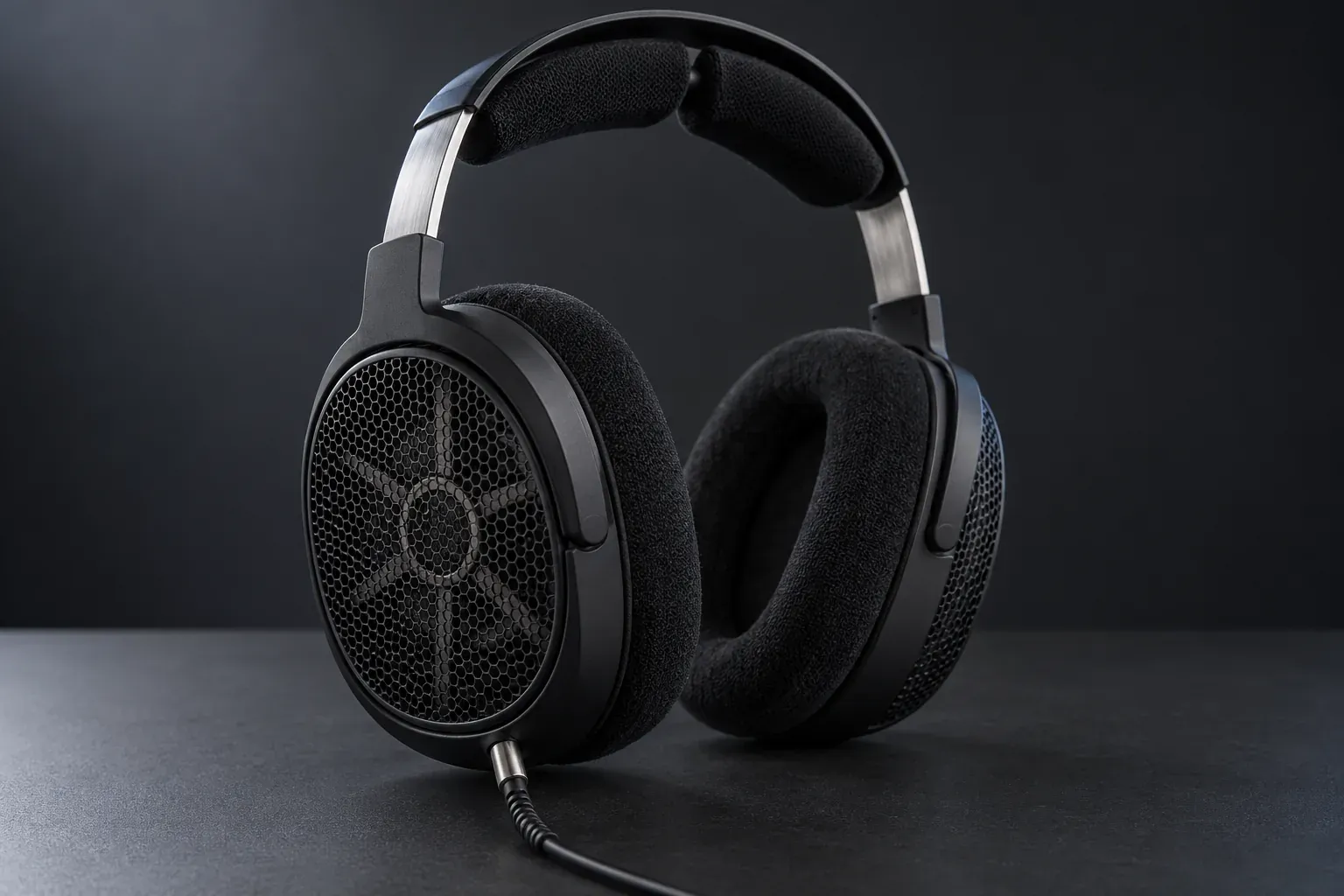
Sennheiser’s US store listed the HD 490 PRO at $429 and the HD 490 PRO Plus at $499. It is open-back, 130 ohms and 260 g, rated at 105 dB SPL for 1 V (96 dB for 1 mW), and the box holds a 1.8 m cable, a 3.5 to 6.3 mm adaptor and two sets of ear pads, one for mixing and one for producing. The earcups have braille-guided left and right markings, and the pads have grooves for glasses.
Sonarworks’ final rating is 8.8 without correction and 9.4 with model-average calibration. Its channel-balance check found matched bass across three pairs and high-mid differences within 2 dB; the review calls it a top recommendation. RTINGS puts the bass 1 dB under its target and the treble on it, finds the drivers well matched with a phase shift only in the high treble, and rates the fit very comfortable.
MusicRadar gave it 4.9 stars and says Sennheiser “has done an excellent job creating headphones that meet the demands of mixing and mastering”, with “Pricey” under reasons to avoid. MusicTech scored it 9 for a “supremely accurate reference sound” but found that changing pads makes an “indiscernible difference” to the sound. SoundGuys is cooler at 6.8: a great choice “as long as you have a quiet room to listen in”, with ear pads that are difficult to swap. Thomann buyers rate it 4.7 of 5 from 100 reviews.
The catch is leakage, and the second pad set may not earn its place: MusicTech heard almost no difference, and SoundGuys found the pads fiddly to change. Anyone else in the room hears your mix. I’d still buy it first for most mixing, because it pairs the second-highest uncorrected Sonarworks final rating with closely matched units for $270 less than the NDH 30.
Sennheiser HD 560S: best budget pair
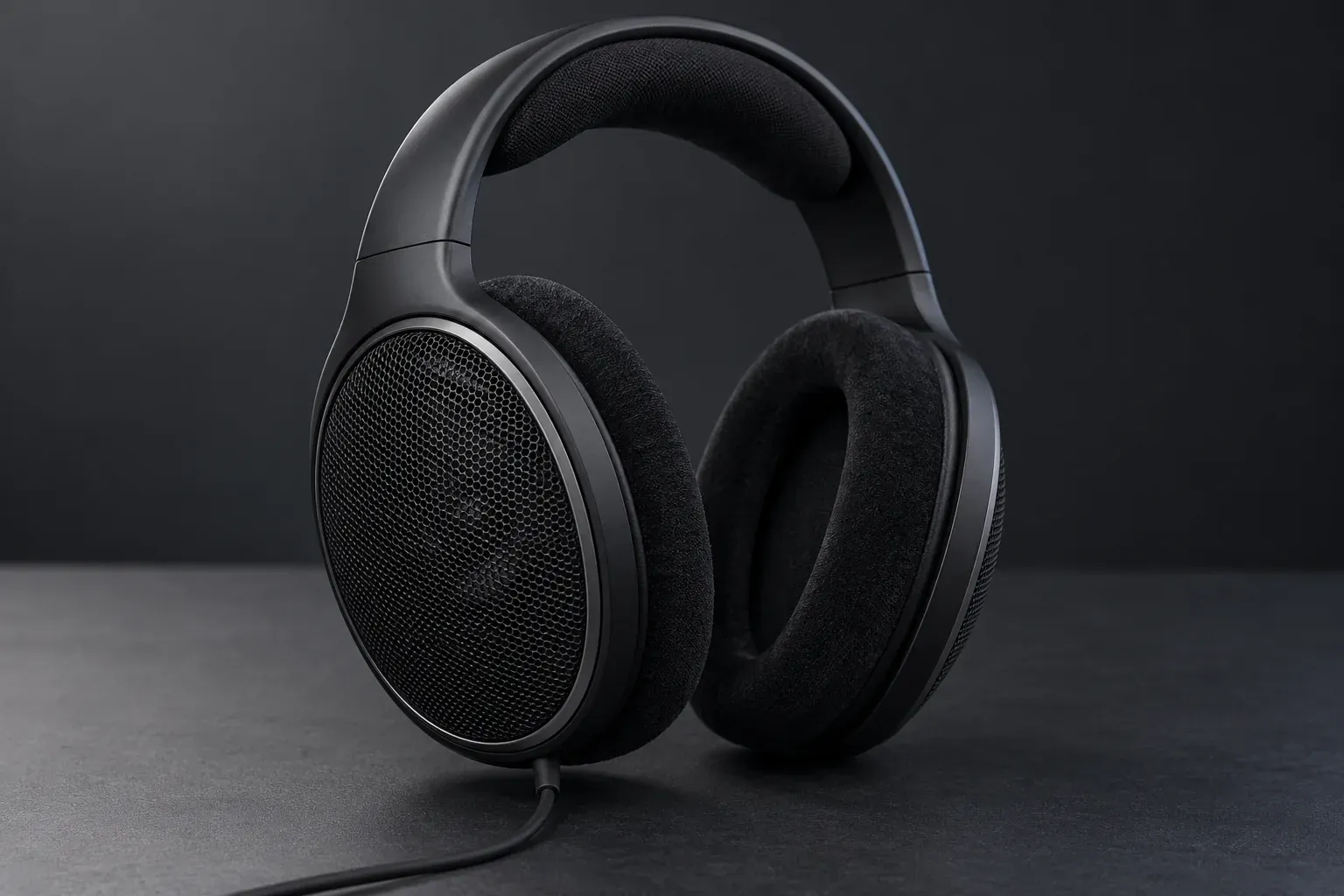
Sennheiser’s consumer store listed the HD 560S for $179.95 against a $279.95 compare-at price. It is open, 120 ohms and 280 g, rated at 110 dB SPL for 1 V, with angled drivers, a 1.8 m cable with a 3.5 mm plug, a 6.3 mm adapter and a drawstring bag.
Sonarworks’ final rating is 7.3 out of the box and 8.2 calibrated, with left/right channel balance within about ±1 dB through most of the range. RTINGS finds a flat sound overall apart from a few treble peaks that can make cymbals sound dull or piercing, very well matched drivers, bass 4 dB under its target and a fit comfortable enough for a whole day.
TechRadar’s 2020 review gave it 4.5 stars for an “astute, revealing sound”, and warned that it is “not the most entertaining (or tolerant) listen” and slightly leaky. Home DJ Studio scored it 9.0, with “superb neutrality” on one side and “disappointing bass” on the other. SoundGuys gave it 6 and warns that the largely plastic band may show early wear if you aren’t gentle. Thomann buyers rate it 4.7 of 5 from 140 reviews.
The catch is the low end. With RTINGS measuring the bass 4 dB down and Home DJ Studio calling it disappointing, kick and bass levels need a second opinion from a reference track or a speaker. I’d buy it when $180 is the budget, because it sits 1.5 points behind the HD 490 PRO out of the box for about $250 less, and a “revealing” sound is what a mixing pair is for.
Sennheiser HD 480 PRO: best closed pair for tracking and mixing
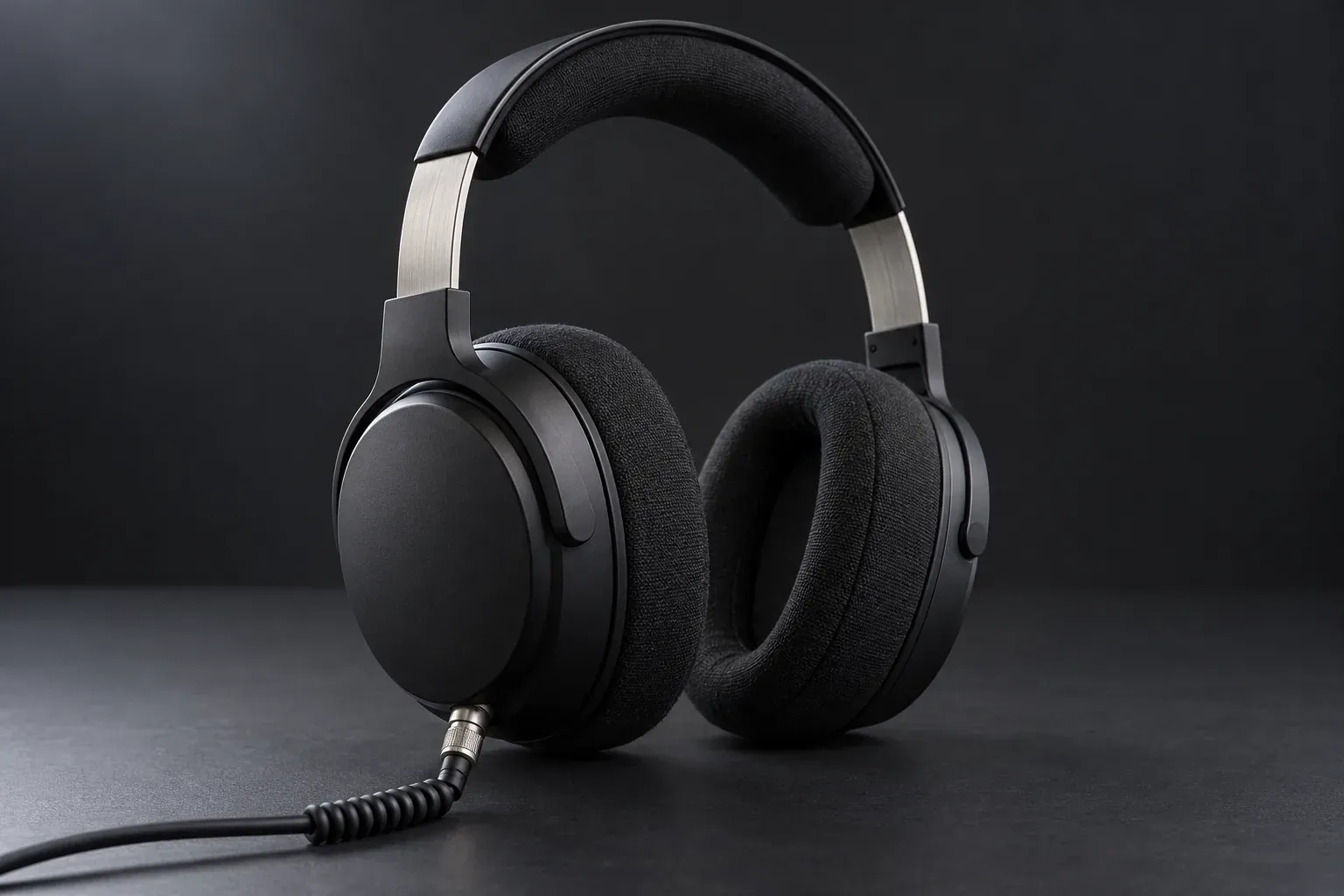
Sennheiser’s US store listed the HD 480 PRO at $399. It is closed-back, 130 ohms and 272 g, rated at 107 dB SPL for 1 V (98 dB for 1 mW), with a mini-XLR 4-pin cable that plugs into either earcup and what Sennheiser calls a Vibration Attenuation System. The pads are washable and replaceable, the headphone is fully serviceable, and the Plus version adds a travel case.
The Sonarworks sources used here do not include a score for it, so the measured comparison comes from RTINGS: bass 1 dB above target, treble 1 dB below, a touch of extra warmth in the bass with balanced mids and a slightly rolled-off treble, and left and right drivers with excellent matching. RTINGS also calls the plastic hinges a likely weak point and notes the basic carrying pouch.
It also has the most scored reviews of the five. MusicTech scored it 9 for “well-behaved voicing that doesn’t cause fatigue” and noted that a professional case costs extra. MusicRadar gave it 4.5 stars, called it “a no-brainer” for closed-back mixing duties and said it will be “a huge asset for checking the bass and sub bass”. Pickr gave the Plus kit 4.2 stars and heard “restraint” in the highs and lows at times, and SoundGuys scored it 7.7, listing limited accessories. Only six Thomann buyers had rated it in the October 30 snapshot, at 4.7 of 5.
The catch is a thinner evidence base: no Sonarworks score in this comparison, six captured buyer ratings, and hinges RTINGS doesn’t trust. I’d buy it when one pair has to record vocals and then mix them, because it is the only pick here that keeps the cue mix out of the mic, and four critics put it at a median of 8.7.
Sony MDR-MV1: best straight from a Mac headphone jack
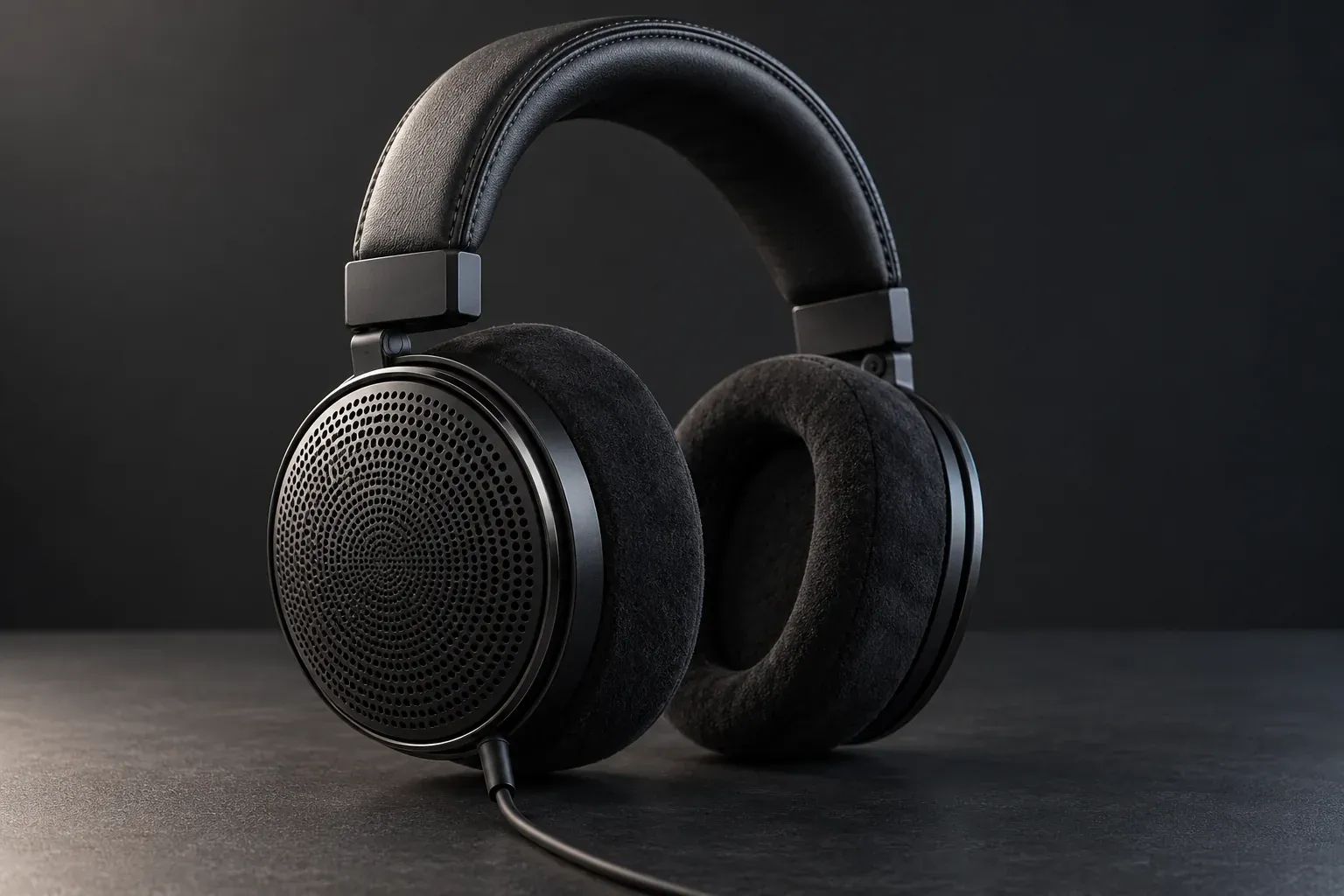
Sony’s US store listed the MDR-MV1 at $339.99 on sale against a $419.99 list price and sells it “for immersive mixing and stereo mastering”, with a 5 Hz to 80 kHz range. Sony Japan’s spec sheet lists an open-back dynamic design with a 40 mm driver, 24 ohms, 100 dB/mW, a 1,500 mW maximum input and about 223 g without the cable.
Sonarworks’ final rating is 7.7 without correction and 9 with model-average calibration, the largest increase among the four final ratings compared here. The review describes its pair-to-pair and left-right consistency as the tightest Sonarworks had measured, with three units effectively identical. RTINGS tested it on an older bench that gives no bass or treble figure. It finds a somewhat neutral sound with piercing sibilants that can be fatiguing, a surprising amount of bass for open-backs, and bass that varies with glasses or earrings in the way of the seal. It leaks even at moderate volume, has a detachable cable and comes without a carrying case.
MusicTech gave it 10 and called it “highly capable of tackling 360-degree and surround mixes”, though the ear pads are not user-replaceable. What Hi-Fi? gave it 4 stars, with 5 for build and comfort, for a “crisp, clear and detailed” sound whose presentation “could sound more balanced”. SoundGuys, at 6.4, calls it “extremely bassy” and says it needs EQ for most uses. Thomann buyers rate it 4.8 of 5 from 38 reviews, the highest buyer score of the five.
The catch is a split verdict on the tuning. A 10 from MusicTech and a 6.4 from SoundGuys describe the same headphone, and RTINGS’ sibilance note means long sessions can tire you. I’d buy it for a Mac-only desk or for Atmos work, because at 24 ohms a recent Mac jack drives it to about 118 dB SPL on paper with no interface, and Sonarworks found its units the most alike of any pair it has measured.
Neumann NDH 30: best match for Neumann monitors
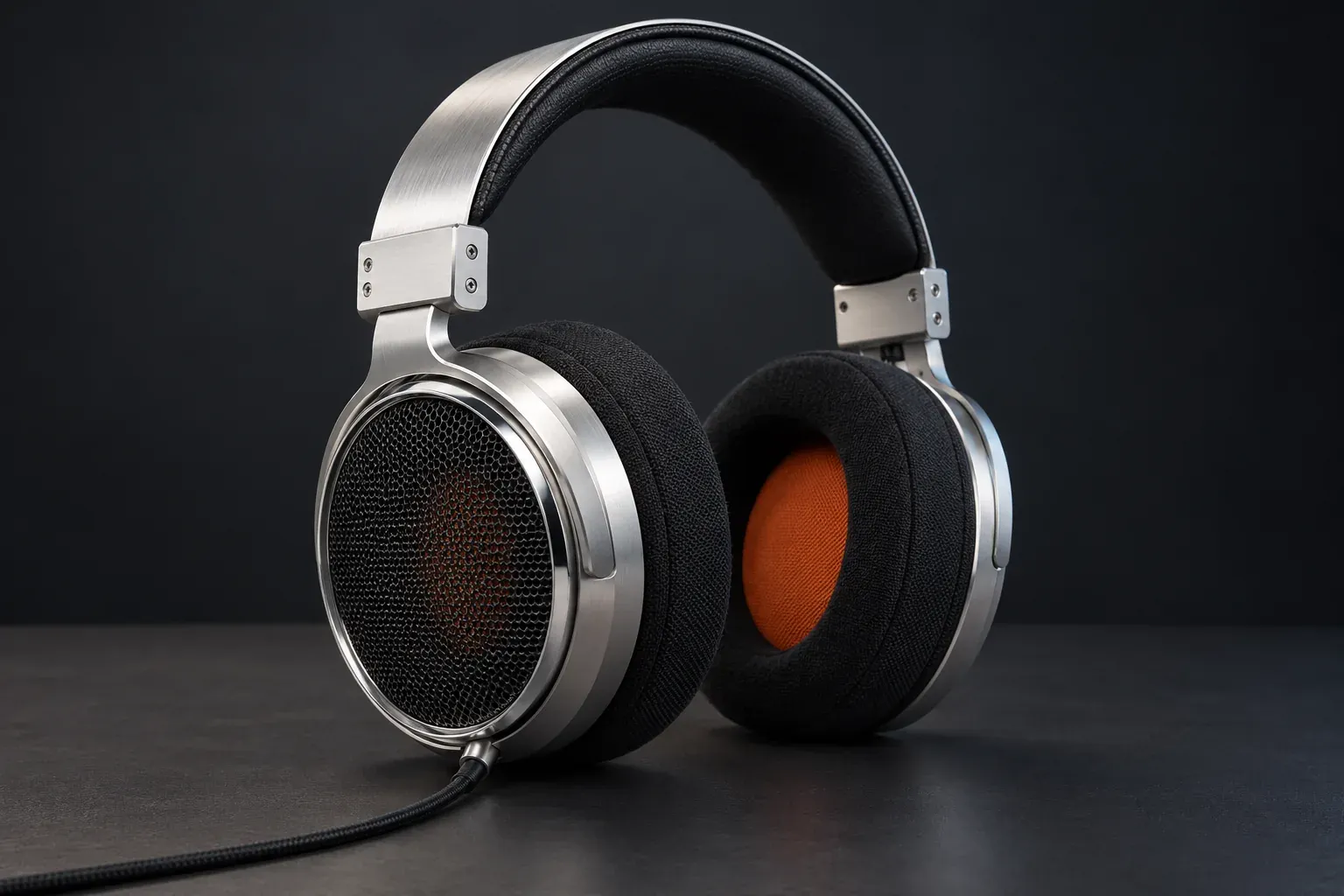
Neumann’s US store listed the NDH 30 at $699 as an open-back reference headphone for editing, mixing and mastering, with sound and mix compatibility with its KH-Line speakers. It is 120 ohms, rated at 104 dB SPL for 1 V, 12 Hz to 34 kHz and 352 g without the cable, and it folds. The 3 m cable is detachable and enters the right earcup, with a 3.5 mm plug and a 6.3 mm adapter, and the pads are replaceable.
Sonarworks’ final rating is 8.9 out of the box, the highest of the five, and 9.1 calibrated. It measured eight pairs: channel balance showed a couple of 2 dB discrepancies, while pair-to-pair differences reached about ±4 dB near 6 kHz. The MV1 and HD 490 PRO matched more tightly, on samples of three units each. No RTINGS result for the NDH 30 is included here.
MusicTech scored it 8 for “highly accurate frequency response and stereo imaging”, while its cons say “quality comes at a high price”, the right-entry cable “might annoy some” and it is not as comfortable as some competitors. SoundGuys, at 6.2, credits it with identifying details in the mid-range of a mix but lists a lack of low and high frequencies, and says you don’t necessarily need to spend this much to get neutral sound. Thomann buyers rate it 4.7 of 5 from 83 reviews.
The catch is what the extra money buys. It leads the HD 490 PRO by 0.1 out of the box for $270 more, weighs 92 g more, and this comparison includes only two scored reviews. I’d buy it if you already mix on Neumann KH monitors and want the headphones to agree with them. Otherwise the HD 490 PRO gets you nearly the same score for less.
Why not the HD 600, ATH-M50x, MDR-7506 or DT 770 PRO?
Because each one trails a pick on the numbers that exist: a lower Sonarworks final rating without correction, a lighter or brighter measured response, less closely matched units, or more power than a Mac jack gives. They are familiar studio options and are fine to keep if you already own one.
| Headphones | Sonarworks final rating, no correction | RTINGS bass / treble | Why it isn’t a pick |
|---|---|---|---|
| Sennheiser HD 650 | 8.2 | Not used here | 0.6 behind the HD 490 PRO, and 300 ohms |
| Sennheiser HD 600 | Not used here | −5 dB / not used here | The lightest bass in this guide, and 300 ohms |
| Audio-Technica ATH-M50x | Not used here | 0 dB / 0 dB | Left and right drivers not well matched |
| Sony MDR-7506 | 6.4 | −4 dB / +5 dB | Very bright treble, uneven units |
| Beyerdynamic DT 770 PRO | 6.5 (250-ohm version) | −4 dB / +1 dB | Lean bass and a lower Sonarworks final rating |
| Audeze MM-100 | Not used here | −4 dB / −5 dB | Recessed treble, needs more than 100 mW |
The HD 600 and HD 650 are the open-back classics. Sennheiser listed the HD 600 at $329.95 against $499.95 and the HD 650 at $379.99 against $579.95, both open-back at 300 ohms. RTINGS puts the HD 600 bass 5 dB under target, and Sonarworks scores the HD 650 8.2 out of the box with consistency it calls exceptional. For about $50 more than the HD 650, the HD 490 PRO scores higher and doesn’t depend on the jack’s 3 V high-impedance mode.
Audio-Technica’s ATH-M50x measures on target for bass and treble, but RTINGS finds its left and right drivers not well matched and its consistency sub-par. That matters more for mixing than for listening, because a level difference between the ears moves the center of the stereo image. Thomann buyers rate it 4.7 from 1,939 reviews, which shows popularity, not accuracy.
The MDR-7506 measures 4 dB light in the bass and 5 dB bright in the treble, and Sonarworks scores it 6.4 and says its consistency is not the best. The DT 770 PRO measures 4 dB light in the bass and 1 dB up in the treble, and Sonarworks scores the 250-ohm version 6.5, even though the 80-ohm version has 4.8 of 5 from 5,425 Thomann buyers. Seven more Sonarworks reviews, from the ATH-M40x to the AKG K371, top out at 7.5 out of the box for the Beyerdynamic DT 900 PRO X, with the ATH-M60x and Austrian Audio Hi-X65 next at 7.3.
Audeze’s MM-100 is a planar open-back designed with engineer and producer Manny Marroquin, listed at $299 against $399 in the October 30 snapshot, but Audeze recommends more than 100 mW and it weighs 475 g. RTINGS measures its bass 4 dB and treble 5 dB under target and calls the treble notably recessed. At 18 ohms it gets about 86.8 mW from a Mac jack on paper, below Audeze’s own minimum.
Can a Mac headphone jack drive studio headphones?
Yes. All five picks get loud enough from a recent Mac’s headphone jack on paper, so you don’t need a separate amp for them. Apple says the jack detects the impedance of what you plug in and supplies up to 1.25 V RMS into headphones under 150 ohms and 3 V RMS into 150 ohms to 1k ohms, at sample rates up to 96 kHz. Apple lists that for iMac from 2023, MacBook Air from 2022, MacBook Pro from 2021, Mac mini from 2023, Mac Studio from 2022 and the 2023 Mac Pro, so on an older Mac treat the table below as optimistic.
| Headphones | Impedance | Rated sensitivity | Mac jack voltage | Calculated maximum on paper |
|---|---|---|---|---|
| Sony MDR-MV1 | 24 Ω | 100 dB/mW | 1.25 V | 118.1 dB SPL |
| Audeze MM-100 | 18 Ω | 98 dB/mW | 1.25 V | 117.4 dB SPL, at 86.8 mW |
| Sennheiser HD 560S | 120 Ω | 110 dB/V | 1.25 V | 111.9 dB SPL |
| Sennheiser HD 480 PRO | 130 Ω | 107 dB/V | 1.25 V | 108.9 dB SPL |
| Sennheiser HD 490 PRO | 130 Ω | 105 dB/V | 1.25 V | 106.9 dB SPL |
| Sennheiser HD 600 | 300 Ω | 97 dB/V | 3 V | 106.5 dB SPL |
| Neumann NDH 30 | 120 Ω | 104 dB/V | 1.25 V | 105.9 dB SPL |
These are calculated maximums on paper, not measured levels. For pairs rated per volt, the figure is the sensitivity plus 20 × log10 of the jack voltage; for the two rated per milliwatt, it is the sensitivity plus 10 × log10 of the power that voltage pushes into their impedance. The math assumes the jack reaches its rated voltage and ignores cable loss. These theoretical maxima estimate amplifier headroom. They are not an exposure measurement or a safe margin above NIOSH’s 85 dBA exposure reference. The sensitivity calculation is not A-weighted and does not account for the actual programme, fit or listening duration. Use it to judge drive capability, not a safe volume setting.
An audio interface earns its place for other reasons: microphone inputs, a second headphone output for a singer, and a physical volume knob. Our audio interface picks by recording job sort those, and its section on direct monitoring and latency covers hearing yourself while you record.
How do you set up studio headphones in Logic Pro?
- Plug in the headphones and confirm that macOS sees the output before you open Logic; our Audio MIDI Setup check covers the Mac side.
- In Logic, choose Logic Pro > Settings > Audio, click Devices, and pick the output in the Output Device pop-up menu. Apple’s Devices settings page says the menu lists any installed Core Audio device, including the Mac’s internal sound hardware, and that Logic stores the choice with the project. With an interface, pick the interface and follow our steps to choose it in Logic’s audio settings. If it is missing from the menu, run the interface selection check.
- Stay wired. Our latency guide explains why a wired output replaces Bluetooth before anything else.
- While mixing, set the I/O buffer to the largest size, which Apple recommends so you can run more processor-heavy plug-ins, then bring it back down before you record. Our buffer size guide covers the recording side.
- If you use headphone correction such as SoundID Reference as a plugin, put it on the last insert slot of the Stereo Out channel strip, after any mastering plugins, and bypass it before you bounce. Apple’s output channel strip page says those inserts process the signal during normal playback, and Logic’s bounce takes the tracks routed to Output 1-2, so a correction plugin left on prints its headphone EQ into the file. Our guide to bounces that sound different covers the other causes.
- No sound at all? Start with our output device check.
If you record through an interface, plug the headphones into its headphone output and pick one monitoring path, so you don’t hear yourself twice.
Can you mix Dolby Atmos on headphones in Logic Pro?
Yes, through binaural monitoring, and any of the five works for it. In a Dolby Atmos project, Logic’s monitoring formats always include the Dolby Renderer binaural format, plus Apple Renderer options that match the headphone virtualization Apple Music and Apple TV use for Spatial Audio. For headphone monitoring, the Apple Renderer options require macOS Monterey 12.3 or later; your Logic Pro version can require a newer macOS. Head tracking also needs AirPods that support it selected as the output device, and the Apple Renderer’s head tracking mode needs a Mac with Apple silicon.
Under the Dolby Renderer, each channel has a binaural render mode of Off, Near, Mid or Far. Mid is the default except for LFE, which is fixed at Off. These modes do nothing under the Apple Renderer options. Apple’s Atmos project setup runs at 48 or 96 kHz and 24 fps and switches the surround format to 7.1.2. Bounce renders with the monitoring format you have selected, so a bounce with a binaural format selected gives you a two-channel binaural file. Our Dolby Atmos guide covers choosing between the two renderers and making a binaural reference.
Apple says AirPods Max over USB-C get 24-bit, 48 kHz lossless audio and are the only headphones that let musicians create and mix in Personalized Spatial Audio with head tracking across a Logic Pro workflow, and AirPods Max 2 list lossless and ultra-low latency audio over USB-C with the H2 chip. Creating the personal Spatial Audio profile requires an iPhone with a TrueDepth camera. That makes AirPods Max a check for how the Apple Music render will sound, not a replacement for a neutral pair, because no lab score in this guide covers them. Among the five picks, Sony sells the MV1 for immersive mixing, and MusicTech found it highly capable with 360-degree and surround mixes.
How do you make a headphone mix translate?
Check it against things outside the headphones. Level-match a commercial track before every comparison, as our reference track guide explains, because the louder version almost always sounds better. Fold the mix to mono with our mono check: on headphones each ear hears only its own channel, so a stereo problem can hide until the mix plays on one speaker. Measure loudness on the file you will deliver with our LUFS meter guide. Then play the bounce on whatever else you have: a speaker, earbuds, a car.
Keep the level moderate, too. NIOSH’s noise guidance shortens its recommended daily exposure duration above 85 dBA, halving it for every 3 dBA, and lowers the level for days longer than 8 hours. That works out to 4 hours at 88 dBA, 2 hours at 91 dBA and 1 hour at 94 dBA. The headroom figures above cannot establish your exposure at the ear. Start with the monitor level low, keep listening time in view and take quiet breaks. Comfort or a volume-knob position does not establish the sound level at your ear; assessing exposure needs a suitable calibrated headphone measurement and duration.
Studio headphone FAQ
Can you mix only on headphones?
Yes, if you check the result outside them. Use a pair that measures close to neutral, such as the HD 490 PRO, level-match your reference tracks, and play the bounce on speakers or earbuds before you release it. Monitors add how the low end and the stereo image behave in a room, which headphones can’t show you.
Are open-back or closed-back headphones better for mixing?
Open-back, if the room is quiet and nothing is recording. Open pairs like the HD 490 PRO and HD 560S leak a lot, so a live mic picks them up; the closed HD 480 PRO leaks little and is the one to wear while you track.
Do you need a headphone amp for studio headphones?
Not for these five on a recent Mac. On paper the Mac jack drives them to between about 106 and 118 dB SPL, and it switches to 3 V for 300-ohm pairs like the HD 600. The exception in this guide is the Audeze MM-100, which gets about 86.8 mW from the jack against Audeze’s recommended 100 mW or more.
Can you mix on AirPods?
Use them as a check, not as the main mixing pair. Over Bluetooth they add latency, as our note on recording with Bluetooth headphones explains, and no lab score here covers them. AirPods Max over USB-C get 24-bit, 48 kHz lossless audio and head-tracked Personalized Spatial Audio in Logic, which makes them useful for hearing an Apple Music Spatial Audio render.
How loud should you mix on headphones?
Quietly enough to last the session. NIOSH’s occupational exposure guidance uses 85 dBA for 8 hours and halves the duration for every 3 dBA increase: 91 dBA corresponds to 2 hours and 94 dBA to 1 hour. Those are exposure limits, not target mixing levels. Start low, take quiet breaks and resist turning up as your ears tire. Comfort alone cannot confirm a safe level; use a suitable calibrated measurement with listening duration when assessing exposure.


